Thursday, 25 June 2015

North-east Victoria

With the glider due to go to Tocumwal for its annual service, Marg and I decided to take a few days along the Murray from there and also explore around North-eastern Victoria.

The Tocumwal golf course is always worth a stroll for its bird-life and even a short stroll brought up Grey-crowned Babblers, Red-rumped Parrots and Noisy Friarbirds - not to mention the hundreds of Galahs and possibly thousands of Corellas.
This Noisy Friarbird (Philomon corniculatis) has very prominent plumes, something I've never really noticed before.
Grey-crowned Babbler (Pomatostomus temporalis) chasing a last-minute snack before settling down for the night with two others (see below).

The next day, we drove along the NSW side of the Murray - great raptor country with a haul of nine raptors that day - Black Kite, Australian Hobby, Nankeen Kestrel, Black-shouldered Kite, Wedgetail Eagle, White-bellied Sea-eagle, Swamp Harrier, Whistling Kite and Brown Falcon.
This Australian Hobby (Falco Longinpennis) stayed put long enough to get a shot or two.
After Barooga, we followed the old stock route section from Barooga to Mulwala, seeing heaps of little birds loving the rough grass, fences and puddles along this rough, "3 chain" track. Zebra Finches, Flame Robins and dozens of Australasian Pipits were the standouts. A large mob (>60) of Shelducks also made a pretty picture in an adjacent paddock.

Along the way, we came a cross a pretty ancient drover with a few hundred head of cattle riding the "long paddock". He said he'd been on the road for 5 years! At $1 per cow per week, it was cheaper than feeding hay in poor times.

A trip through the Boomanoomana State Forest turned up a few Brown Treecreepers alternately foraging on the forest floor with short trips up a tree trunk just to prove they were Treecreepers.

Brown Treecreeper (Climacteris picumnus) shows off its interesting streaking.
Yellow Rosella (Platycercus elegans flaveolus) enjoying a later afternoon snack alongside the Corowa Water Treatment plant.
After a pleasant night in Beechworth, we spent the day in the Chiltern-Mt Pilot National Park in search of Regent Honeyeaters. Alas, no luck but heaps of other Honeyeaters (Yellow-tufted, Fuscous, White-plumed, White-throated, White-naped and Yellow-faced) at Cyanide Dam.
Yellow-tufted Honeyeater (Lichenostomus melanops) comes down for a look at us in poor lighting conditions
A stop at the Glenrowan West power sub-station on the way to overnighting at Benalla produced a few White-Browed Babblers but little else. The next day we visited the Reef Hills State Park South of Benalla where we got a good earful of a lost White-winged Chough churring for its mates nearby. Next onto the Mt Wombat Flora and Fauna Reserve near Strathbogie for some fabulous views but little else. A quick look at the fabulous new Yea Wetlands Interpretive Centre then a pleasant drive via Kinglake West back to Melbourne.

Tuesday, 19 May 2015

Jack Smith Lake & Above

Over the weekend, Marg and I had been trying to spot some Swift Parrots locally for the Birdlife Australia survey but without any luck. As Monday looked like being one out of the (autumn) box, we decided to go down to Jack Smith Lake to see what we might find.

On the way down, we got a close look at first a Whistling Kite then a Wedge-tail Eagle eating some roadkill on the verge. The wedgie decamped into the neighbouring paddock and proceeded to fly over a big, dispersed flock of ewes and lambs, swooping low over each lamb. The lambs didn't seem too fussed and the wedgie may just have been looking for dead lambs.

A quick trip into McLaughlins Beach produced some 70-odd Crested Terns on the beach plus more fishing in the flat sea, together with 3-4 Australasian Gannets. No Flame Robins along the road but numerous Red and Little Wattlebirds plus this little poser:
Superb Fairywren (Malurus cyaneus)
Jack Smith Lake was fairly dry but we had a good list of birds - Red-necked Avocets (2), Australasian Shel-ducks (16), Black-winged Stilts (8), Hoary-headed Grebes (2), Crested Terns (45 on nesting boxes plus another 50+ on the beach), Nankeen Kestrel, White-eared Honeyeater, Red-kneed Dotterels (8-10) were the standouts.
Crested Terns (Sterna bergii) leaping into the air.
Crested Tern accelerating in ground effect for a fast escape.

Red-necked Avocet (Recurivostra novaehollandiae) on the prowl.
A couple of recent shots of interest:
This White-bellied Sea-eagle (Haliacetus leucogaster)was conveniently soaring the clifss over the lake when I was down there with zoom lens at the ready. We've had a couple of instances recently of honking (mating?) behaviour but none within camera range.
Royal Spoonbills (Platalea regia) on the move.
At last, some clear, still nights to get some astrophotography going. This shot is from an EOS60D with a 50mm f1.4 prime lens running on an iOptron portable tracking mount. I stacked 20 minutes of 45 second f2.5 ISO 500 sub-frames in Deep Sky Stacker together with similar numbers of dark, flat and bias frames.
Antares region of Scorpius plus dust lanes. Antares is the bright star to the left of the dust lanes, Messier M4 is the bright object below it and the planet Saturn is the bright object at lower middle right. There are over 20,000 stars in this picture.
A previous post (Out of the blocks) discussed mountain lee waves (Wikipedia) and showed some photos. I've been filming timelapes of them and decided to share one shot today.


Shot at Coongulla in Victoria looking North where the wave is coming off Mt Wellington (5,400 feet) in an increasing NW wind. Thus, the wave length increases as time goes by. Shot as 10 auto-frames per minute and played at 24fps spanning about a two hour  period.

Sunday, 10 May 2015

Mount Worth State Park

The Heyfield birdwatcher's latest outing was to Mount Worth State Park, located SE of Warragul (see map here and park information here).

Marg, Jos and me decided we'd stay locally the night before and we found Twitcher's Cottage very comfortable and good value; also only 2km from the park. I recommend it for anyone wanting some bush-walking or bird-watching locally.

Very windy and a few showers the evening before but we spotted a Grey Currawong, 6 Yellow-tailed Black Cockatoos and heaps of Eastern Spinebills in the garden or nearby.

Out for a walk nearby before meeting up with the rest of the group in the State Park, we spotted these two lovelies in the nearby bush:
A Bassian Thrush (Zoothera lunulata) moved and jumped around too much for a photo. This one was actually taken a week before in the Edward Hunter Heritage Bush Reserve near Moe (map here); another great spot.
This Swamp Wallaby (Wallabia bicolor) sat and watched us for a bit near a small dam before deciding to take cover. We have one in the bush nearby at home but from time to time, he shows up near the house. Three weeks ago, we spotted him under a Cherry Tree right by the house.
Off to the park to meet up with the rest of the group and Merryn from Twitcher's Cottage as our guide. Birding was secondary to the fabulous vegetation and funghi as the combination of cloudy weather, very tall trees and very thick under-story made spotting very hard.
Dense tree-terns at ground level.
Mountain Ash towered 35-50m above the dense tree-fern forest floor. One old giant is 65m and that is with quite a few metres of its top missing.

A myriad of funghi and plant forms were spotted but I'll leave it to Gouldiae to explain what they are.
Some form of epithyte growing.
Close-up of the same epithyte.
Apart from more Yellow-tailed Black Cockatoos, White-browed Tree-creepers, Varied Sitellas, Eastern Yellow Robins, and a few "little brown jobs", the highlight was a pair of Lyrebirds heard in the nearby bush. Their mimicry of Kookaburras, Shrike-thrush, Whip-birds, Yellow-tailed Cockatoos and others was fantastic. Merryn suggested that the first visitors of the day are likely to spot them out in the open.

Definitely a place worth another visit!

Sunday, 26 April 2015

Swarming Honeyeaters

With 65 mm of rain two weeks ago plus another 50 mm this week, the countryside has turned green at last. In the bush, the box trees have started flowering again and this has attracted swarms (literally) of Honey-eaters. Some mornings, there are up to one hundred smaller honey-eaters flying from tree to tree around the house, in company with similar numbers of Red Wattlebirds.

It is too hard to identify the smaller ones on the go so we need to track them through the bush to get a clear identification. Even then, this ongoing cloudy weather makes getting an ID, let alone a photo, very difficult.

At the moment, we have:

  • Yellow-faced Honeyeaters (Lichenstomus chrysops) - quite common here and present in droves
  • White-plumed Honeyeaters (Lichenostomus penicillatus) - less common here but several sighted
  • White-naped Honeyeaters (Melithreptus lunatus) - ditto
  • Crescent Honeyeaters (Phylidonryris pyrrhoptena) - only ever had a few sightings here but several present now
  • Scarlet Honeyeater (Myzomela sanguinolenta) - never seen one here and only ever seen them locally in the wild twice before so a real thrill to spot here; brings our "on property" species count to 187!
  • Red Wattlebirds (Antochaera carunculata) - ever present but numbering over 100 at the moment.
  • Noisy Friarbirds (Philemon cornicultus) - the flocks of 2-3 dozen have disappeared but we still hear them from time to time.
  • Noisy Miners (Manorina melanocephala) - also ever-present and very aggressive towards interlopers.
  • Eastern Spinebills (Acanthorhynchus tenuirostris) - usually around in ones or twos but have seen 10-15 at a time in the last few days.
Some photos of honey-eaters from previous occasions and multiple locations:

Blue-faced Honeyeater (Entomyzon cyanotis)
White-naped Honeyeater (Melithreptus lunatus)
New Holland Honeyeater (Phylidonyris novaehollandiae)
Yellow-faced Honeyeater (Lichenstomus chrysops)
Yellow-tufted Honeyeater (Lichenostomus meanops)
Lewins Honeyeater (Meliphaga lewinii) - one of my better shots


Friday, 24 April 2015

Suburban Wetland Surprise

On our way through Melbourne to the airport last week, we decided to explore the Dandenong Creek wetlands in Rowville. These are easily accessed from the back of the BP service station in the Northbound Eastlink side, between Wellington and Ferntree Gully Roads (see Google maps here; note that Google Earth shows very little of the current wetlands being present).

There is a nice concreted ride/walk path along the creek for miles, providing good access to the wetlands. There are several shallow lakes surrounded by rough grass and few small shrubs.

Along the mudflats were dozens of Grey Teal, a few Chestnut Teal, 8-10 Black-winged Stilts, a few Red-kneed and Black-fronted Dotterels, Purple Swamp Hens, Dusky Moorhens, a Royal and a Yellow-billed Spoonbill. On the way back, we watched a Nankeen Kestrel dive on a snack in the long grass.

All in all, a surprising hail of birds in a short time and surrounded by houses and industry (although they are all a few hundred metres away). Definitely warrants a longer exploration next time.
Royal Spoonbill (Platalea regia)

Yellow-billed Spoonbill (Platalea flavipes)

Black-winged Stilt (Himantopus himantopus)
Grey Teal (Anas gracilis)
Masked Lapwing (Vanellus miles)

Thursday, 23 April 2015

Hobart Weekend

Marg and I ducked down to Hobart this week for a few days to celebrate her birthday, visit an Aunt, checkout MONA and get out and about for some new species. We ended up with 12 new (to us) species from Mt Wellington, Lune River and Bruny Island:

  • Yellow-throated Honeyeater
  • Strong-billed Honeyeater
  • Black-headed Honeyeater
  • Forest Raven
  • Green Rosella
  • Tasmanian Native Hen
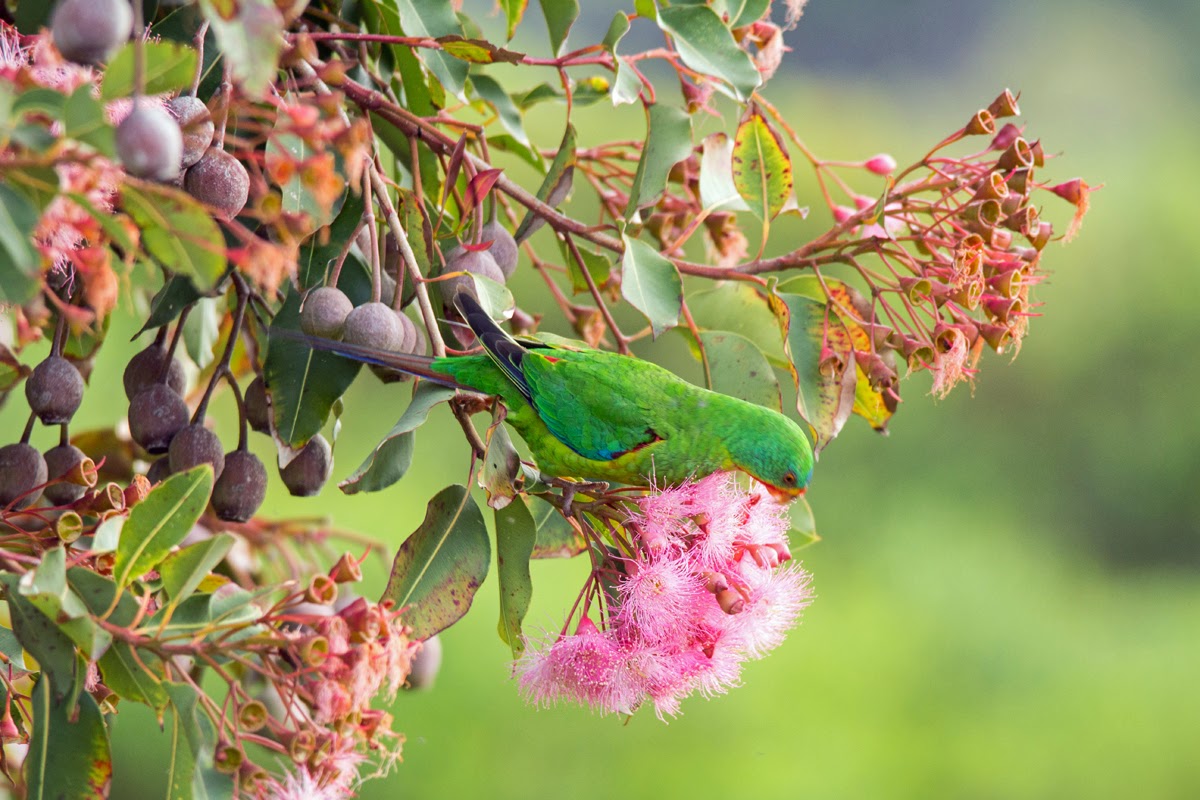
  • Swift Parrot
  • Forty-spotted Pardalote
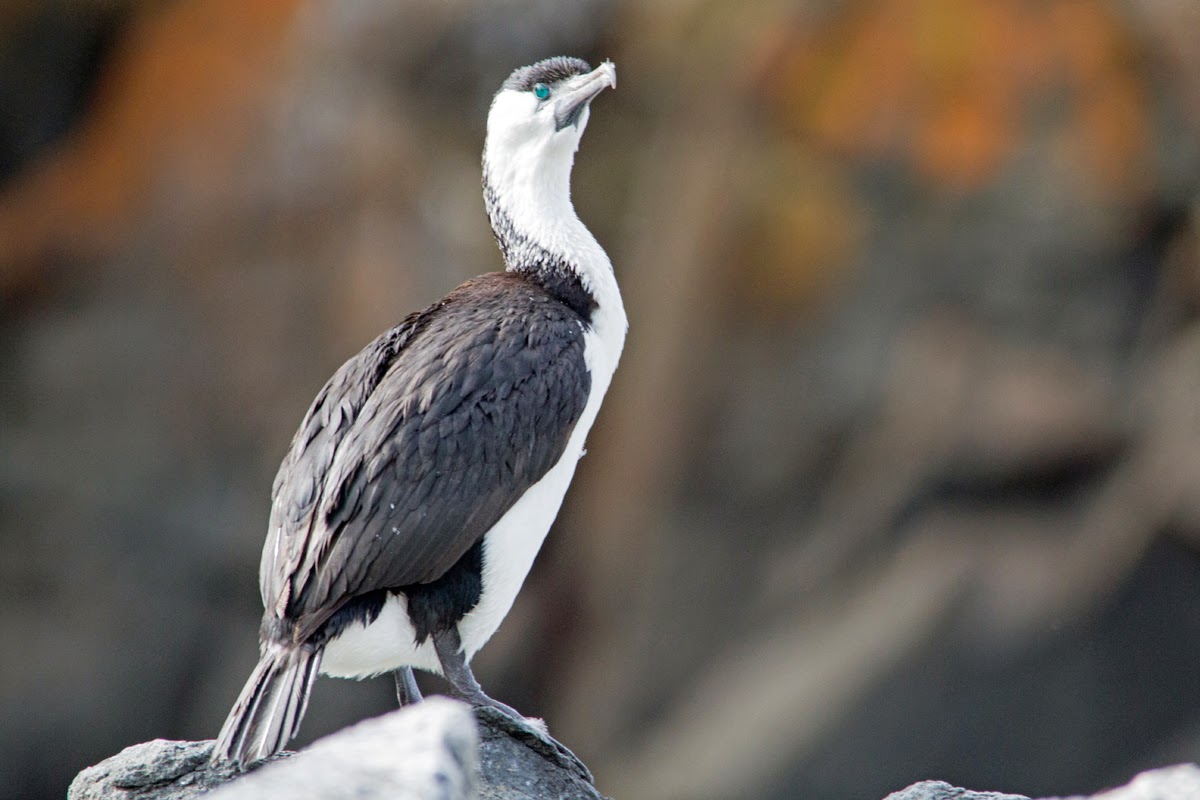
  • Black-faced Cormorant
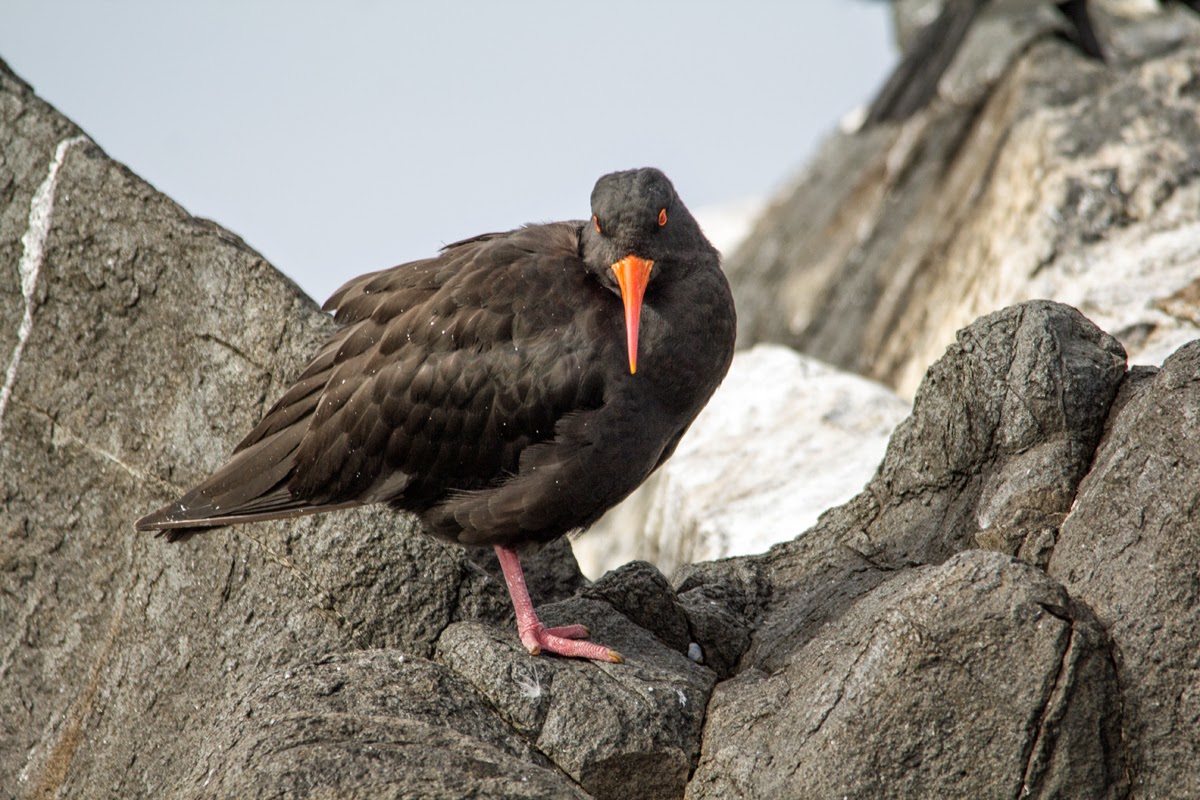
  • Sooty Oystercatcher
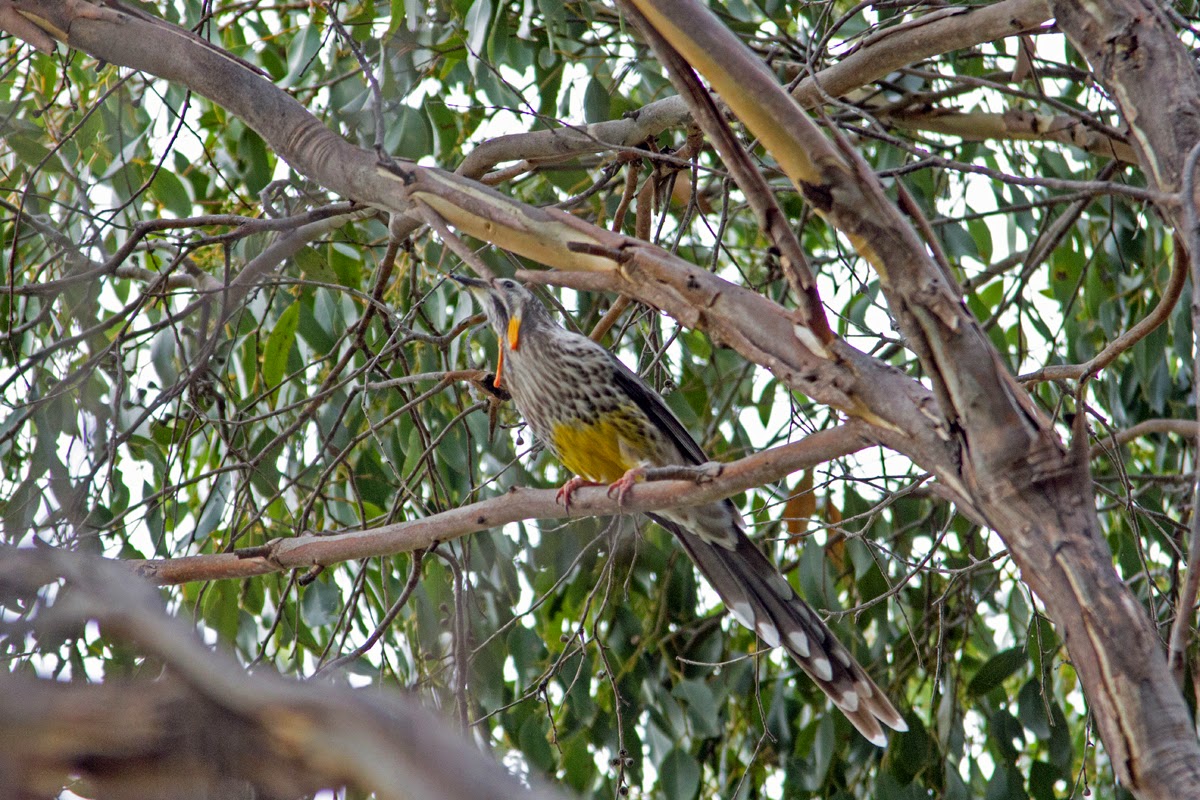
  • Yellow Wattlebird
  • Australasian Gannet
There were another 4-5 common species sighted with different Tasmanian races. We had high hopes of seeing a Pink Robin down along the Ida Bay Railway but it was not to be. 

Quite a lot of pelagic birds when we went out with Bruny Island Cruises, including Gannets and Albatross but hard to photograph and confirm identities at speed in a moderate swell.

Cloudy weather, tall bush and dull light made it hard to get decent shots and confirm sightings but I managed to scrub these up.
Swift Parrot

Black-faced Cormorant

Sooty Oystercatcher

Pied and Sooty Oystercatchers

Yellow Wattlebird


Tuesday, 17 February 2015

More visitors

Gang-gang Cockatoos visit occasionally from the surrounding hills, chasing the drying gum-nuts after the flowering season. Six or seven have been around the last few days with their distinctive "creaking door" call.
White-throated Needletails are spotted here 4-5 times per year, usually riding low-pressure troughs ahead of a change. The other day, about 50 showed up on a bright, sunny evening and spent 5-10 minutes swooping low through the garden chasing insects at high speed; you can hear a "swoosh" as they zip by. At such close range and high-speed with the background varying from dark garden to bright sky, getting a decent photo is almost impossible. If you look closely though, you can see the needles in the tail.
A few Neon Cuckoo Bees showed up the other day in the lavender and some native purple flowers in the garden. Apparently, they lay their eggs in the larvae of the Blue-banded Bee (another regular visitor). Very hard to photograph as they stay on each flower for only a few seconds.
Luckily, not a visitor here but one of about a thousand Fruit Bats warming itself in a tree outside Maffra. Individually, they're cute but such large flocks cause havoc in urban areas with noise, manure and eating out domestic fruit trees.
Recently, a Sacred Kingfisher zipped across the road in front of us an into a willow tree by the road a few kilometres away. Going back, I could see some movement inside the hole after the male had departed so took a quick shot in the evening light and the auto-flash triggered. The baby looks like it had just hatched.
A friend recommended this free online book to me and it is a great resource. Check it out at www.digitalbirdphotography.com. Worthy of a small donation.